

Why Does My Car Shake When I Brake?
Maybe you’ve noticed it at a stoplight or while slowing down on the highway. You press the brakes, and the steering wheel starts to shake. It may stop once you’ve slowed down, but then it happens again the next time you brake.
That kind of shaking can happen for a lot of reasons. Worn brake parts are just one possibility, though problems with the tires or suspension may feel much the same. Here’s why your vehicle might act that way when you brake and what to do about it so you can keep driving without worries.

Start With What You Feel
The location and timing of the shaking can tell you a bit about what’s going on.
If the steering wheel shakes when you brake, the problem may be related to the front brakes or suspension. If you feel the vibration mostly through the brake pedal, the braking system itself may need to be inspected.
You might also notice shaking through the seat or the whole vehicle. That may point to issues farther back in the vehicle, like the rear brakes, wheels, or tires.
A few details to note:
- Is the shaking going on only when you brake?
- Is it worse when you brake from higher speeds?
- Do you feel it in certain areas (e.g. steering wheel, brake pedal, seat) or throughout your whole vehicle?
- Does your car pull to one side when stopping?
- Do you hear squealing, grinding, or any other odd sounds?
Those kinds of details can help your technician pinpoint the cause.
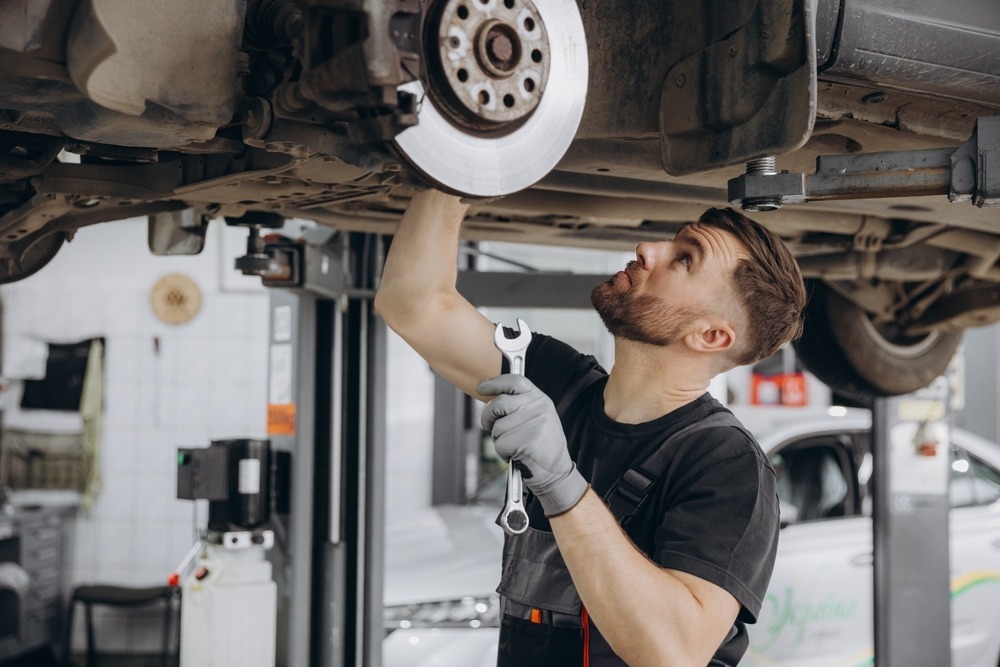
Common Reasons a Vehicle Shakes During Braking
One of the biggest possibilities for this is a problem with the brake rotors: the flat metal discs that the brake pads clamp onto to slow the vehicle. If a rotor ends up with uneven surfaces or thickness, the brake pads may not make consistent contact with it.
That may create a noticeable vibration when braking, especially when you drive at higher speeds.
Worn brake pads may also contribute to braking problems. Brake pads slowly become thinner and thinner as you put more miles on your car and eventually need to be replaced. In some cases, uneven pad wear can also affect how the brakes feel.
But there are other possibilities, too. A technician may need to check:
- Brake calipers and other brake components
- Wheel alignment and suspension parts
- Tires for uneven wear or damage
- Wheel balance and condition
- Loose or worn steering and suspension components
Note that if your SUV or truck shakes when braking, it’s usually for many of the same reasons as a sedan. The size or type of vehicle doesn’t really change the basic troubleshooting process.
When Should You Have It Checked?
If the shaking is new, getting worse, or happening every time you brake, it’s a good idea to have the vehicle inspected rather than waiting to see if it goes away.
Brakes are among the most important safety components on your car. A vibration doesn’t automatically mean you’re dealing with a serious failure, but you won’t know the cause without an inspection.
It’s even more important to have your vehicle checked out if shaking happens with other symptoms, like:
- Grinding or scraping noises
- A soft or unusually firm brake pedal
- Pulling to one side when you hit the brakes
- Longer stopping distances
- Any kind of burning smell
- Warning lights on your dashboard
If braking suddenly feels very different from normal, avoid continuing to drive your car until you can have it evaluated safely.
How Genesis of Milwaukee Can Help
Trying to figure out the cause of car shaking when braking on your own isn’t always easy. Several problems can produce similar symptoms, and replacing one part without finding the actual cause may not solve the issue.
At Genesis of Milwaukee, our service center in Waukesha can inspect your vehicle’s braking system and look for related problems involving specific components (e.g. brakes, alignment, suspension). Our dealership’s service department works on Genesis vehicles and offers brake replacement and adjustment, front-end alignment, vehicle inspections, and other maintenance and repair services.
That can give you a better idea of what’s causing the shaking and what needs to be done next.
Shaking When Braking FAQ
Why does my steering wheel shake when I brake?
A steering wheel that shakes when you brake often points to the front brakes or suspension. One of the most common causes is a brake rotor with an uneven surface or thickness, which keeps the brake pads from making consistent contact. Tires, wheel balance, alignment, and worn steering or suspension parts can cause a similar feeling, so an inspection is the best way to find the source.
Can worn brake pads cause my car to shake when braking?
Yes. Brake pads get thinner as you put more miles on your vehicle and eventually need to be replaced. Worn or unevenly worn pads can change how the brakes feel, and they are often checked together with the rotors when a vehicle shakes during braking.
Is it safe to drive if my car shakes when braking?
A vibration doesn’t automatically mean a serious failure, but you won’t know the cause without an inspection. If the shaking is new, getting worse, or comes with grinding noises, a soft or firm brake pedal, pulling to one side, longer stopping distances, a burning smell, or dashboard warning lights, have your vehicle checked right away. If braking suddenly feels very different from normal, avoid driving until it can be evaluated safely.
Why does my SUV or truck shake when braking?
SUVs and trucks usually shake when braking for the same reasons as sedans: uneven brake rotors, worn brake pads, sticking calipers, tire or wheel problems, alignment issues, or worn suspension and steering parts. The vehicle’s size or type doesn’t change the basic troubleshooting process.
Where can I get my brakes inspected near Milwaukee?
The Genesis of Milwaukee service center at 1503 East Moreland Boulevard in Waukesha, WI, can inspect your braking system, alignment, and suspension. Our service department offers brake replacement and adjustment, front-end alignment, vehicle inspections, and other maintenance and repair. Call our service team at (262) 254-7048 or schedule an appointment online.
Don’t Ignore a New Vibration
A vehicle that shakes when you brake is giving you a reason to pay attention. It could be something as straightforward as worn brake components, or it may involve another part of the vehicle that affects how it handles and stops.
If you’re noticing unusual shaking or another change in braking performance, Genesis of Milwaukee can help you get some answers. Contact our service team or set up an appointment to have your vehicle checked to stop a smaller problem from becoming a bigger (and costlier) one.
0 comment(s) so far on Why Does My Car Shake When I Brake?